
How to keep your doodle from matting between grooms
Matting is the number one reason a coat gets shaved instead of styled. The good news: ten minutes of the right brushing, a few times a week, prevents almost all of it.

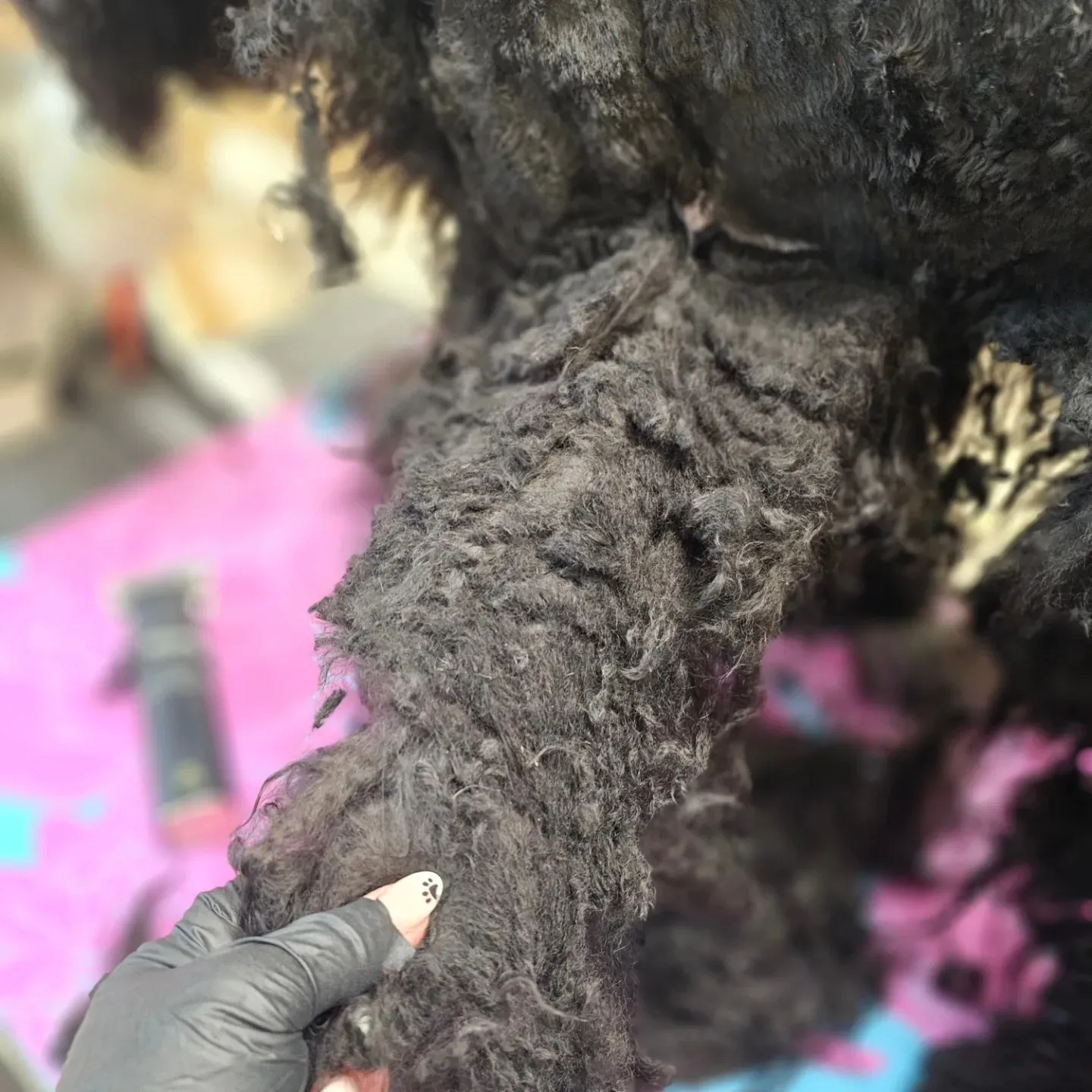
If you own a doodle, a poodle, or any curly non-shedding breed, you already know the six-week cliff: the coat looks fine, then seemingly overnight it’s matting against the skin. Here’s how to keep the coat you love between our visits, and why the brush you probably own isn’t doing much.
The two tools that actually work
A basic pin brush glides over the top of the coat and misses the mats forming underneath, which is why coats “brushed daily” still show up matted. You want a slicker brush (fine angled wires) to work the coat, and a metal comb to check it. The comb is the real test: if it can’t pass cleanly from the skin out to the tip, there’s a mat there, brushed-looking or not.
The technique: line brushing
Mats form at the skin, so you have to brush from the skin out, not just over the surface. Part the coat in a line, hold the hair above the part flat, and brush the exposed section from the roots outward. Move the part up a little and repeat, working in lines up the body. It sounds fussy; after a few sessions it takes about ten minutes.
The spots everyone misses
- Behind and under the ears. The single most common mat we see.
- Armpits and where the legs meet the body. Friction points that mat fastest.
- The collar line. Check under the collar; it rubs constantly.
- Rear and “pants.” The longer feathering behind the back legs.
Three habits that prevent most matting
Brush before a bath, never a wet matted coat, since water tightens a mat like a knot. Aim for a proper line-brush three or four times a week, not one marathon session. And keep to your grooming schedule: a slightly-too-long coat is far harder to maintain at home than a freshly groomed one.
One honest note: if you do find a tight mat, don’t try to cut it out with scissors. It’s frighteningly easy to catch skin, and it’s one of the most common ways dogs get injured at home. Leave it, and we’ll work it out safely at the next visit. If you’re ever unsure, bring your comb to your appointment and your groomer will show you exactly where your dog is prone to matting. Prices and what a groom includes are on our doodle grooming page.
Common questions
How do you get mats out of dog hair?
Work from the skin outward with a slicker brush, holding the hair above the mat so the pulling happens against your hand rather than against skin, then check the spot with a metal comb. Never cut a mat out with scissors, because it is frighteningly easy to catch the skin underneath.
Why does my dog still mat when I brush every day?
A pin brush glides over the top of the coat and misses what is forming underneath, which is why coats brushed daily still arrive matted. Mats start at the skin, so the brushing has to start there too.
What is line brushing?
Part the coat in a line, hold the hair above the part flat, and brush the exposed section from the roots outward, then move the part up a little and repeat, working in lines up the body. After a few sessions it takes about ten minutes.
Where do dogs mat first?
Behind and under the ears, in the armpits and where the legs meet the body, along the collar line, and in the longer feathering behind the back legs. Those are the friction points, and the ears are the single most common one we see.
Should you bathe a matted dog?
No. Water tightens a mat like a knot, so brush the coat out before a bath rather than after. A matted coat that gets washed and dried almost always comes back worse.
How do you check whether a coat is really mat-free?
Use a metal comb, not the brush. If the comb passes cleanly from the skin out to the tip everywhere you try it, the coat is clear. If it snags, there is a mat there whatever the surface looks like.